Key takeaways
- Roof-safe solutions should match the roof material, stain type, and surrounding landscaping.
- Organic roof stains usually need treatment, not aggressive pressure.
- Plant protection, runoff control, and proper dilution are part of a safe cleaning plan.
- Homeowners should ask what solution is used, how long it dwells, and how the property is rinsed afterward.
What makes a cleaning solution roof-safe?
A roof-safe cleaning solution is selected for the roofing material and the stain source. Tile, asphalt shingles, metal panels, and roof edges all respond differently. The safest plan avoids treating every surface like a driveway.
Organic staining from algae and mildew usually needs a solution that breaks down growth at the source. Pressure alone can remove surface color temporarily while leaving conditions that allow streaking to return quickly.
Why does dilution matter?
More chemical is not automatically better. Proper dilution helps balance cleaning strength with surface protection, plant safety, and runoff control. A provider should know how to adjust the mix based on roof condition and material.
Dwell time matters too. A solution needs enough time to work, but it should not be left unmanaged around landscaping, painted surfaces, or sensitive runoff areas. Good cleaning is controlled, not casual.
How should plants and gutters be protected?
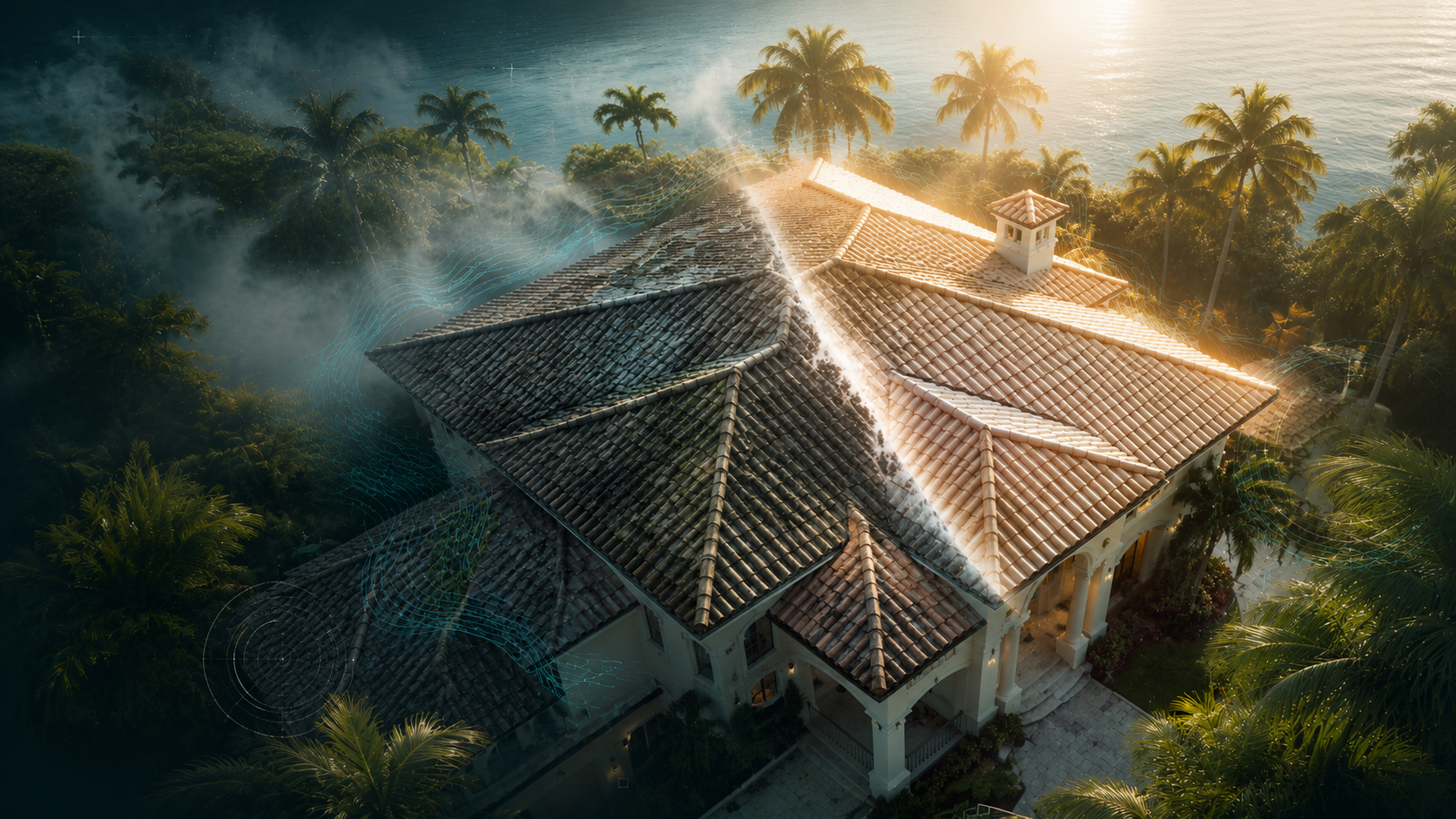
Florida homes often have palms, shrubs, turf, and flower beds directly below roof edges. Roof-safe cleaning includes pre-wetting plants, managing runoff, rinsing after treatment, and watching where solution moves through gutters and downspouts.
Homeowners should ask whether the provider bags downspouts, diverts runoff, or uses a rinse process. The right answer depends on the home, but there should always be a property protection plan.
What questions should homeowners ask?
Ask what solution will be used, why it fits your roof type, how pressure is controlled, and what happens if runoff reaches landscaping. Ask whether the method follows manufacturer-friendly soft washing principles for shingles or tile.
A roof-safe provider should explain the tradeoffs clearly. If the answer is only about speed or force, keep comparing options.
FAQ
01What is the safest cleaner for roof algae?
+
The safest cleaner depends on roof material, stain level, and property conditions. Many roof-safe methods use controlled soft washing instead of high pressure.
02Will roof cleaning solution hurt plants?
+
It can if handled poorly. Providers should pre-wet plants, manage runoff, and rinse landscaping after treatment when needed.
03Should shingles and tile use the same solution?
+
Not always. Shingles and tile need different handling, pressure limits, dwell times, and runoff planning.